Back to Blogapostille Canadian notarized documents
Apostille Canadian Notarized Documents: A Complete Guide
August 14, 2026
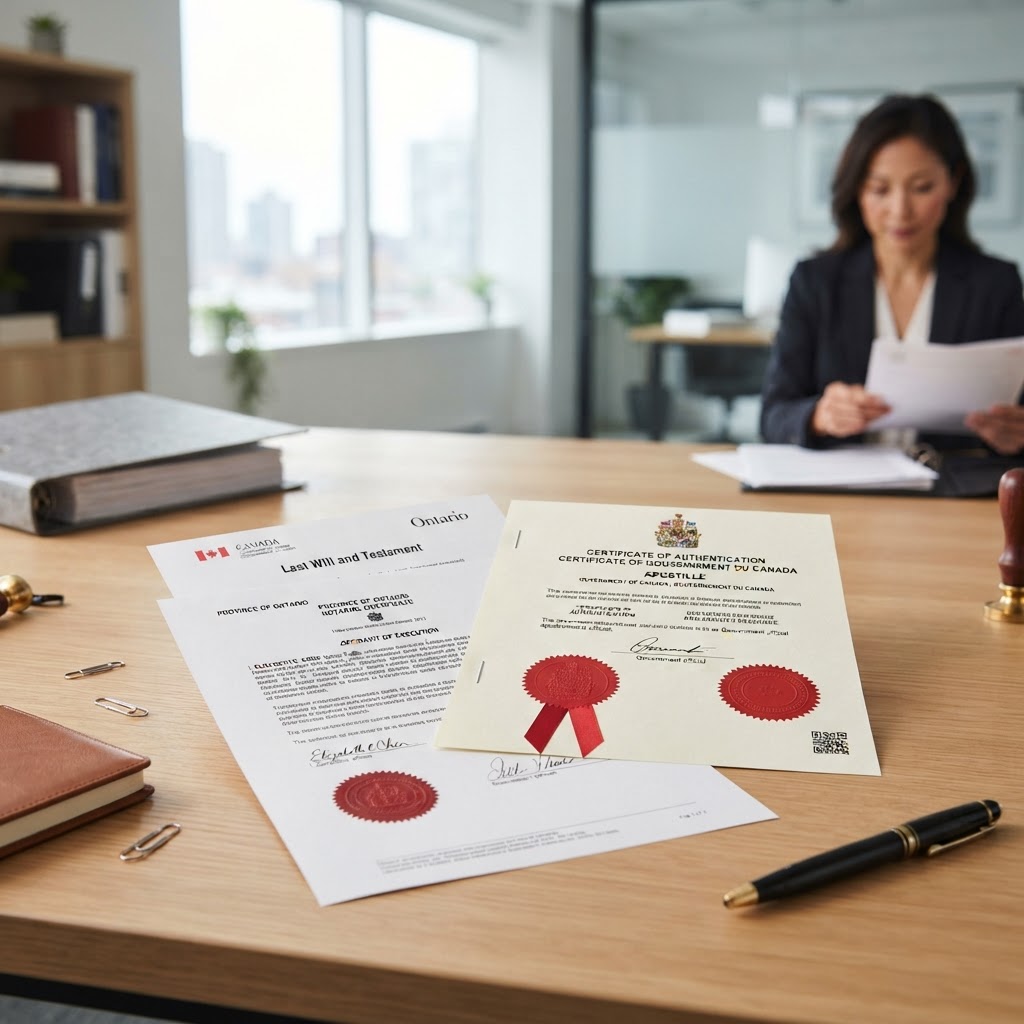
Understanding the Canadian Apostille Process Since January 2024, Canada has officially become a member of the Hague Apostille Convention. This historic shift has streamlined the process for Canadian citizens and businesses to use documents abroad. Previously, Canadians faced a complex two-step process involving document authentication by Global Affairs Canada followed by legalization at a foreign embassy or consulate. Now, an apostille certificate issued by the appropriate Canadian competent authority serves as the singular requirement for document acceptance in over 120 member countries. ## What is an Apostille? An apostille is a standardized certificate that verifies the authenticity of a public document, such as a birth certificate, degree, or notarized document, for use in another country that is part of the Hague Apostille Convention. It confirms the authenticity of the signature, the capacity in which the person signing the document acted, and, where appropriate, the identity of the seal or stamp which the document bears. ## When Does a Document Need Notarization Before Apostille? Not all documents can be apostilled in their original form. Generally, documents issued by private individuals or companies, such as affidavits, power of attorney documents, or statutory declarations, must first be notarized by a Canadian Notary Public or Commissioner for Taking Affidavits. The apostille authority requires a notarized signature to verify the document's validity before they can attach the final apostille certificate. If you are dealing with government-issued documents like a birth certificate from Service Ontario or an RCMP background check, these may already carry an official signature and seal that meets the requirements for apostille without further notarization, depending on the specific provincial or federal office guidelines. ## Which Canadian Documents Can Be Apostilled? A wide range of Canadian documents are eligible for the apostille process, including: * Vital statistics documents (Birth, marriage, and death certificates from provincial registries) * Education documents (University degrees, diplomas, and transcripts) * Criminal record checks (RCMP background checks) * Corporate documents (Articles of incorporation, by-laws, and board resolutions) * Legal documents (Court orders, divorce certificates, and notarized affidavits) ## Competent Authorities in Canada The responsibility for issuing apostilles in Canada is split between the federal government and provincial authorities. Knowing where to submit your request is critical to avoiding delays. ### Global Affairs Canada (GAC) Global Affairs Canada is responsible for the authentication of federal documents, including those issued by federal agencies, RCMP criminal record checks, and certain other documents that meet specific federal criteria. ### Provincial and Territorial Authorities Provinces such as Ontario (via the Ministry of Public and Business Service Delivery), British Columbia, Alberta, and others have established their own competent authorities to handle provincial documents. For instance, birth certificates issued by a provincial vital statistics office are typically handled at the provincial level. It is essential to verify which office has jurisdiction over your specific document to ensure your application is processed efficiently. ## Step-by-Step: Getting Your Documents Ready 1. Confirm Requirements: Determine if the destination country requires an apostille for your specific document type. 2. Notarization: If your document is a private record, ensure it is properly signed and sealed by a licensed Canadian Notary Public. 3. Verify Eligibility: Ensure the document is in the correct format. For example, some provincial government documents must be original long-form certificates rather than photocopies. 4. Application: Submit your document to the relevant competent authority. This may involve filling out specific application forms, providing proof of identification, and paying the required administrative fees. 5. Processing: Wait for the authority to review and affix the apostille certificate. Once the apostille is attached, the document is ready to be recognized internationally in member states of the Hague Apostille Convention. ## Common Challenges and How to Avoid Them The most common delay in the apostille process occurs due to improper document preparation. Before submitting, double-check that your notary’s stamp is legible and that the document has not been altered or damaged. If you are submitting multiple documents, ensure they are organized and that each one meets the specific criteria of the relevant provincial or federal authority. Working with professional document processing services can help you navigate the intricacies of Canadian bureaucratic requirements, ensuring your paperwork is prepared correctly the first time.
Need Help with Your Documents?
Our team is ready to assist with your apostille needs. Get a free quote or start your order today.