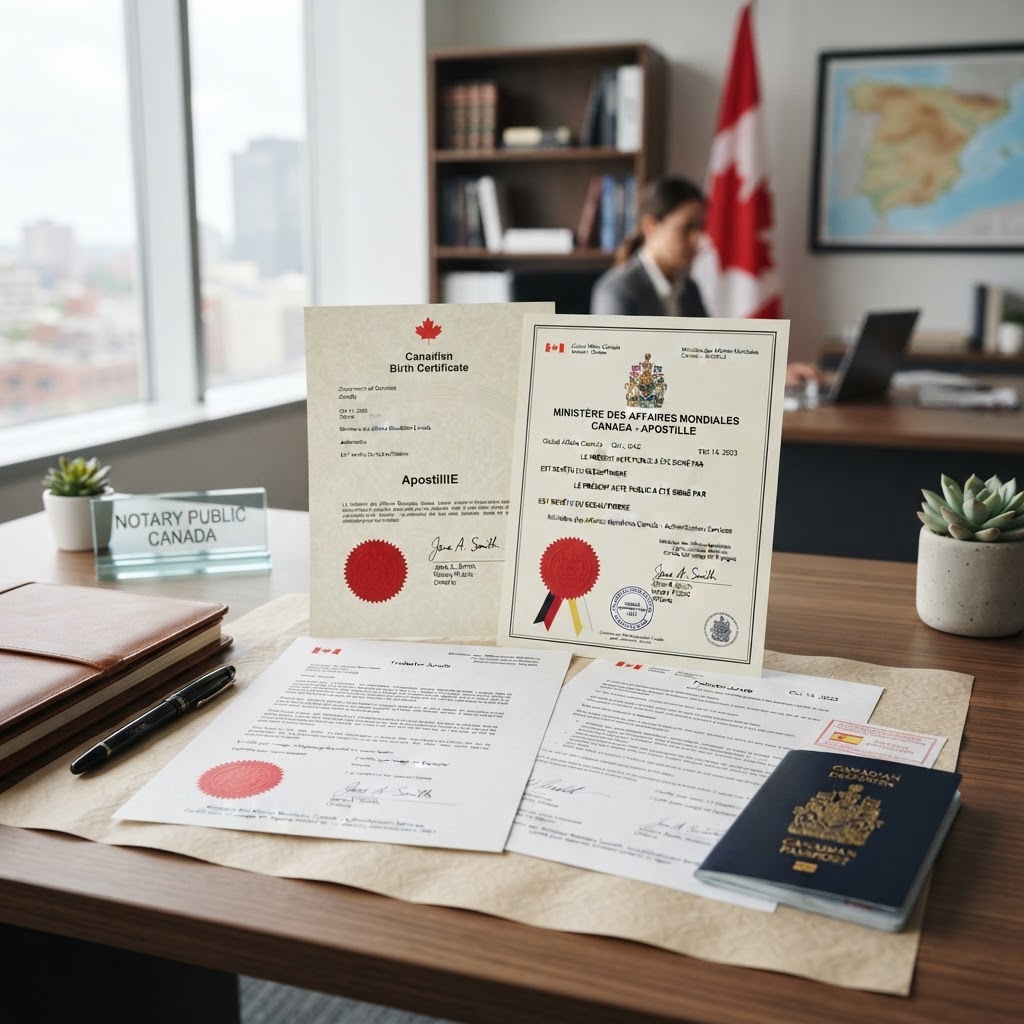
Apostille for Spain: A Guide for Canadian Documents
Navigating the Canadian Apostille Process for Spain
Since Canada officially joined the Hague Apostille Convention in January 2024, the process for preparing Canadian documents for use in Spain has become more streamlined. For Canadians relocating, working, or studying in Spain, the requirement to have local documents legally recognized is a critical step in the administrative process. Whether you are providing a birth certificate for a residency application or a university degree for employment, understanding how to transition from Canadian certification to international validity is essential.
Understanding the Apostille for Spain
An apostille is a certificate that authenticates the origin of a public document. Because Spain is a signatory to the Hague Apostille Convention, Canadian documents that have been properly apostilled are accepted by Spanish authorities without further legalization by a consulate. This international treaty ensures that once a Canadian government body or provincial authority has certified the document’s authenticity, it is recognized as valid for legal use across Spanish borders.
Common Canadian Documents Requiring Apostille
Spanish institutions frequently request specific documentation to prove identity, educational attainment, or criminal record status. The following Canadian documents are commonly processed:
- Vital Statistics Documents: Birth, marriage, and death certificates issued by provincial or territorial registries (such as Service Ontario or similar provincial offices).
- Educational Records: Degrees, diplomas, and transcripts issued by recognized Canadian universities or colleges. These often require notarization by a Canadian notary public before they can be processed for an apostille.
- Background Checks: RCMP criminal record checks. To be valid for an apostille, these documents must be processed correctly, often requiring the original certificate issued by the RCMP.
- Notarized Documents: Powers of attorney, affidavits, or declarations that have been witnessed and sealed by a licensed Canadian notary public.
The Role of Global Affairs Canada and Provincial Authorities
Under the updated Canadian framework, document authentication is handled by both Global Affairs Canada and, in many cases, competent provincial authorities. For many document types, the province of origin now serves as the primary authority for issuing an apostille. For example, if you have a vital statistics document from Ontario, the Ministry of Public and Business Service Delivery may handle the apostille process. For documents issued federally, such as those originating from federal departments, Global Affairs Canada remains the key entity.
Steps to Prepare Your Documents
Successfully obtaining an apostille for Spain requires meticulous preparation to avoid processing delays. Follow these steps to ensure your documentation meets Canadian standards:
- Verify the Document Status: Ensure the document is an original or a certified true copy. Photocopies are generally not accepted unless they have been notarized as a true copy by a Canadian lawyer or notary.
- Notarization: If your document is a private document or a copy of a record, it must be notarized by a Canadian notary public. This official confirms the identity of the signer or the authenticity of the copy.
- Identify the Issuing Authority: Determine whether your document requires provincial-level apostille or federal apostille via Global Affairs Canada. Confusion here is the most common cause of application rejection.
- Submission: Submit your documentation to the appropriate competent authority. Ensure all forms are completed accurately and all associated fees are paid in full.
Challenges and Best Practices
Navigating the bureaucratic requirements of international document authentication can be complex. Even minor errors in documentation—such as a missing seal, an expired certificate, or a signature that does not match official records—can lead to rejection.
To mitigate these risks:
- Check Expiry Dates: Some Spanish authorities require documents to be recent. For instance, a birth certificate or a criminal record check may be considered 'stale' if it was issued more than six months prior.
- Maintain Originality: Always prioritize original government-issued documents over secondary copies. If you must use a copy, ensure the notary signature is clear and the stamp is legible.
- Professional Assistance: Engaging with specialists in Brampton or across Canada can save significant time. Experts in document authentication understand the specific nuances required by Global Affairs Canada and provincial offices, ensuring that your paperwork is compliant from the first submission.
Conclusion
Transitioning your life or business to Spain requires careful attention to detail, particularly regarding the paperwork that defines your legal and professional status. By following the standardized Canadian apostille process—utilizing the support of Global Affairs Canada and provincial authorities—you can ensure your Canadian birth certificates, RCMP background checks, and educational records are fully recognized by Spanish officials. Proper preparation is the most effective way to guarantee your documents are ready for use, allowing you to focus on your upcoming endeavors in Spain.
Need Help with Your Documents?
Our team is ready to assist with your apostille needs. Get a free quote or start your order today.