Back to BlogCanadian documents for use in Brazil
Apostilling Canadian Documents for Use in Brazil: A Complete Guide
August 22, 2026
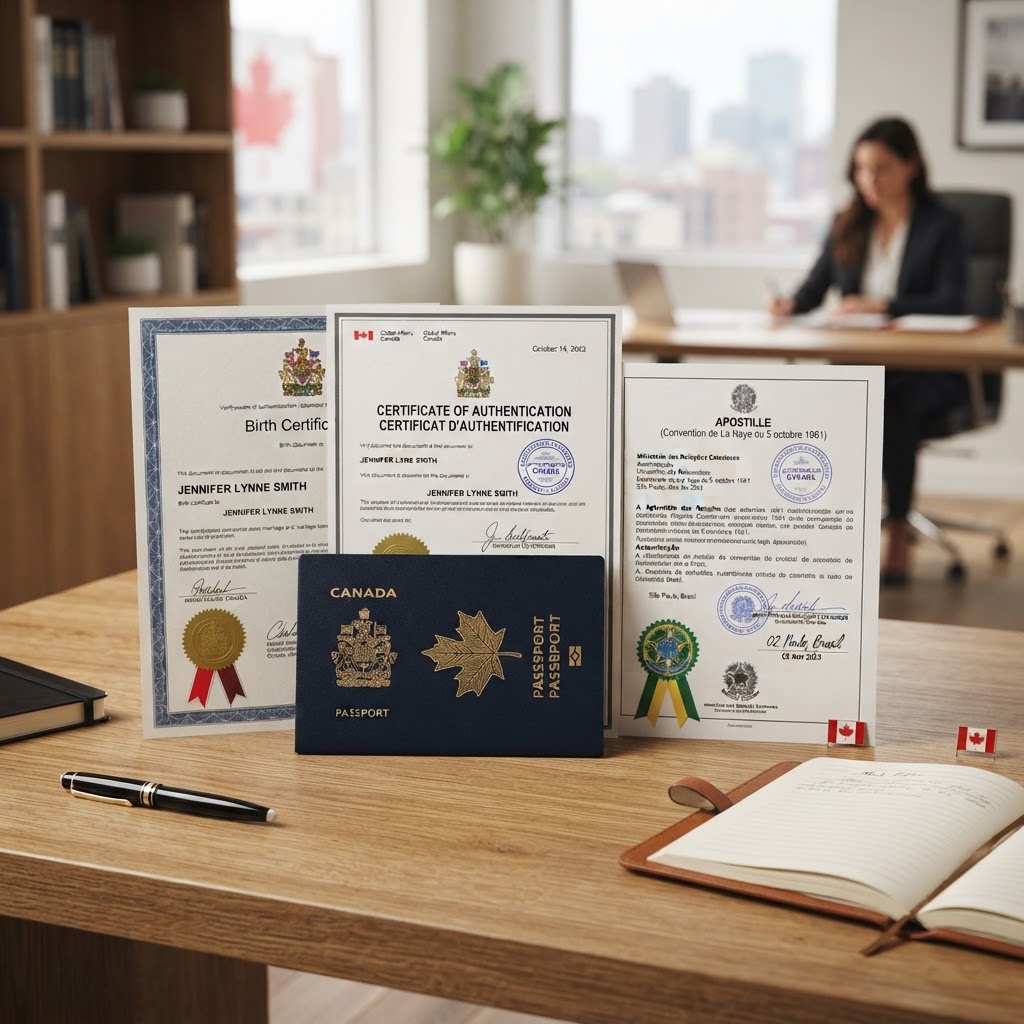
Understanding the Apostille Process for Brazil Since January 2024, Canada has officially joined the Hague Apostille Convention. This historic shift has fundamentally changed how Canadian documents are prepared for use in Brazil. Previously, documents required a complex chain of authentication and legalization involving both Global Affairs Canada and the Embassy of Brazil. Now, the process is streamlined through a single certificate known as an apostille. If you are a Canadian citizen or a business entity looking to work, study, or conduct legal affairs in Brazil, understanding this new framework is essential for ensuring your documents are accepted by Brazilian authorities. ## Common Canadian Documents Requiring Apostille for Brazil Whether you are relocating to Brazil or expanding your business operations, you will likely need to provide specific Canadian documents. These must be properly certified before they can be apostilled. Common categories include: ### Personal Identification and Vital Statistics * Canadian birth, marriage, and death certificates issued by provincial vital statistics offices. * RCMP criminal record checks for employment or residency applications. * Canadian name change certificates. ### Educational and Professional Credentials * Degrees, diplomas, and transcripts from recognized Canadian universities and colleges. * Professional certifications issued by Canadian regulatory bodies. ### Commercial and Legal Documents * Articles of incorporation for Canadian businesses. * Contracts, powers of attorney, and affidavits notarized by a Canadian notary public or lawyer. ## Step-by-Step: Preparing Your Documents for the Apostille Process While the process is now more efficient, accuracy remains paramount. Brazilian authorities are strict regarding the presentation of foreign documents. Follow these steps to ensure compliance: 1. Verify Document Eligibility: Ensure your document is an original or a certified true copy. Many provincial documents, such as birth certificates, must be issued by the provincial registrar to be eligible for apostille. 2. Notarization: For documents that are not government-issued vital statistics records, such as private contracts or degrees, you must have the document notarized by a Canadian lawyer or notary public. 3. Submission to Competent Authorities: As of January 2024, Global Affairs Canada and provincial ministries have established procedures to issue apostilles. You must submit your documents to the relevant authority that has the legal jurisdiction to verify the signature or seal on your document. 4. Translation Requirements: While the apostille verifies the authenticity of the document itself, Brazilian authorities usually require that documents in English or French be accompanied by a sworn translation into Portuguese. This translation must be completed by a recognized translator in Brazil or, in some cases, by a certified translator within Canada who is recognized by the Brazilian consulate. ## Why Accuracy Matters When dealing with international document requirements, any error can lead to significant delays. A document that is missing a signature, carries an outdated stamp, or lacks the required notarization will be rejected by the apostille issuing authority. This can result in costly shipping delays and potential issues with your application in Brazil. For businesses, this might mean missed opportunities; for individuals, it could impact visa timelines or university enrollment. ## The Role of Professional Apostille Services Navigating the bureaucratic requirements of Global Affairs Canada or provincial authentication offices can be daunting. From ensuring your notarized documents meet the specific criteria to managing the courier logistics, the process demands attention to detail. Professional services specializing in Canadian document authentication provide: * Document Review: A thorough inspection to ensure your documents meet the specific requirements of the apostille issuing office. * Efficient Processing: Knowledge of current government service standards and turnaround times to minimize wait periods. * Secure Handling: Reliable courier services to manage the transportation of sensitive original documents. By leveraging expert assistance based in Ontario, you can ensure your Canadian documentation is prepared in full accordance with the Hague Convention, providing you with peace of mind as you prepare for your transition to Brazil.
Need Help with Your Documents?
Our team is ready to assist with your apostille needs. Get a free quote or start your order today.