Back to BlogHague Convention apostille Canada
Canada's Hague Apostille Process: Your Complete Guide
September 11, 2026
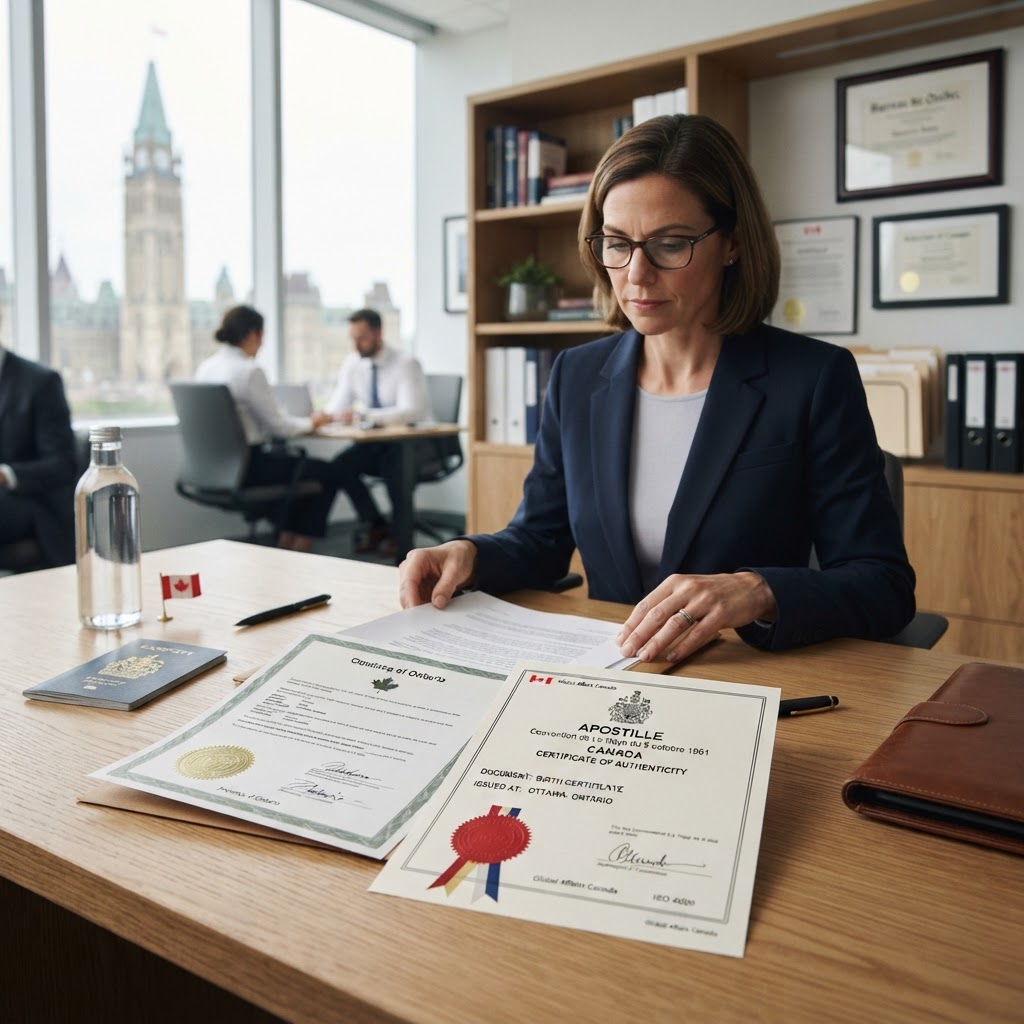
Canada and the Hague Apostille Convention Since January 2024, Canada has officially joined the Hague Apostille Convention, marking a historic shift in how Canadian documents are prepared for international use. Previously, Canadians faced a complex, multi-step process involving Global Affairs Canada and various foreign embassies. The implementation of the Apostille process has simplified these requirements, making it significantly easier to use Canadian documents in over 120 member countries. ## What is an Apostille? An apostille is a certificate issued by a designated competent authority that verifies the authenticity of a public document. It replaces the cumbersome and time-consuming process of legalization via foreign consulates. When you obtain an apostille for a Canadian document, it is internationally recognized by all member states of the Hague Convention as a valid, authentic document. ## The New Canadian Authentication Landscape Before 2024, Canada relied on the authentication and legalization chain. Under the new framework, the apostille serves as the sole requirement for documents to be recognized abroad. This change has fundamentally altered how Canadians approach document preparation. ### Competent Authorities in Canada Depending on the nature of the document and the province of origin, the apostille may be issued by Global Affairs Canada or specific provincial government ministries. Understanding which authority governs your document is the first step in the process. * Global Affairs Canada: Typically handles federal documents, such as RCMP criminal record checks and federal incorporation documents. * Provincial Authorities: Handle documents like birth, marriage, and death certificates, as well as educational diplomas and documents notarized by a Canadian notary public. ## Common Documents Requiring an Apostille Whether for employment, immigration, or business expansion, many Canadians require document verification. Common documents processed include: 1. Canadian Vital Statistics: Birth certificates, marriage certificates, and death certificates. 2. Educational Documents: University degrees, transcripts, and diplomas issued by recognized Canadian institutions. 3. Legal Documents: Powers of attorney, affidavits, and statutory declarations notarized by a licensed Canadian notary. 4. Criminal Record Checks: RCMP-issued background checks for visa applications or international employment. 5. Corporate Records: Articles of incorporation and certificates of status from federal or provincial registries. ## Steps to Obtain an Apostille in Canada Navigating the Canadian system requires attention to detail. Follow these steps to ensure your documents are prepared correctly: ### 1. Document Preparation Ensure your document is in the correct format. If you are submitting a photocopy of a document, it must be notarized by a Canadian notary public or commissioner for taking affidavits. Government-issued documents must often be the original or a certified copy from the issuing registrar. ### 2. Determine the Issuing Authority Verify whether your specific document falls under the jurisdiction of Global Affairs Canada or your respective provincial ministry (e.g., the Ministry of Public and Business Service Delivery in Ontario). Sending a document to the wrong authority will result in delays or rejection. ### 3. Submission and Processing Once the correct authority is identified, the document must be submitted for apostille. Processing times vary significantly depending on the volume of requests and the specific authority involved. ### 4. Verification and Dispatch After the apostille is affixed, the document is considered ready for use in any Hague Convention member country. Many Canadians choose to work with specialized services to manage the physical submission and return of these documents, especially when time is a critical factor. ## Why Expertise Matters in Brampton and Beyond While the process is now unified under the Hague Convention, the logistical requirements within Canada remain rigorous. Errors in notarization or submission can lead to documents being rejected, causing significant delays for Canadians trying to meet international deadlines. Based in Brampton, Ontario, we understand the specific nuances of provincial document requirements and the federal standards set by Global Affairs Canada. Whether you are in Toronto, Vancouver, Montreal, or elsewhere in the country, managing the courier logistics and ensuring your documents meet the exact standards required for the apostille stamp is vital. By leveraging professional assistance, you ensure that your documentation is handled with precision, reducing the risk of errors that could compromise your international ventures.
Need Help with Your Documents?
Our team is ready to assist with your apostille needs. Get a free quote or start your order today.