Back to BlogCanadian document authentication services
Canadian Document Authentication: A Guide to the Apostille Process
August 15, 2026
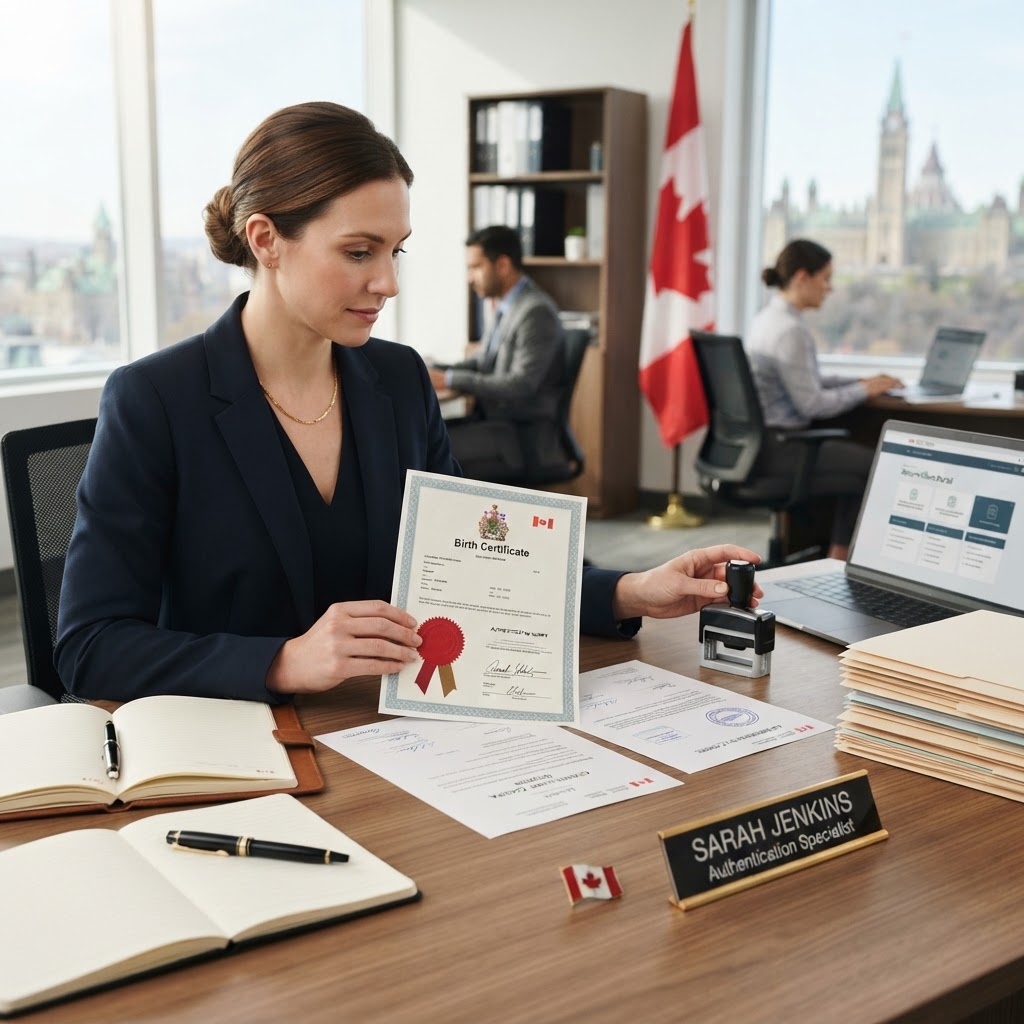
Understanding the New Apostille Process in Canada. Since joining the Hague Apostille Convention in January 2024, Canada has significantly streamlined the process of verifying documents for international use. Previously, Canadians faced a two-step authentication and legalization process involving Global Affairs Canada and foreign embassies. Now, the apostille process provides a single, internationally recognized certificate that validates the authenticity of Canadian public documents. This transition is a major milestone for Canadian businesses, students, and expatriates who frequently interact with foreign jurisdictions. ## What Documents Qualify for an Apostille? In Canada, an apostille can only be issued for public documents. These are documents issued by a Canadian government body or documents notarized by a Canadian notary public. Common documents requiring this service include: 1. Canadian Vital Statistics documents: Birth, marriage, and death certificates issued by provincial or territorial offices. 2. RCMP Criminal Record Checks: Essential for employment or residency applications abroad. 3. Educational credentials: Canadian university degrees, diplomas, and transcripts. 4. Corporate documents: Articles of incorporation, certificates of status, and board resolutions. 5. Notarized declarations: Affidavits, powers of attorney, and other documents verified by a Canadian notary. ## The Role of Global Affairs Canada and Provincial Authorities. The responsibility for issuing apostilles in Canada is split between the federal government and provincial authorities. Global Affairs Canada (GAC) handles federal documents and certain personal documents, while specific provinces have established their own competent authorities to issue apostilles for provincial documents. For instance, if you hold a birth certificate from Ontario, you may work with the designated provincial office, whereas documents issued by federal agencies like the RCMP typically require processing through GAC. Navigating which authority has jurisdiction over your specific document is the first step in the process. Mistakes in identifying the correct authority can lead to unnecessary delays or the rejection of your documentation. ## Steps to Prepare Your Documents for Authentication. Before submitting your documents for an apostille, they must be in a condition acceptable to the issuing authority. This usually involves several preparatory measures: ### 1. Ensure Document Validity. Ensure that your document is an original or a certified true copy. Photocopies are rarely accepted unless they have been notarized by a Canadian lawyer or notary public. ### 2. Notarization Requirements. If your document is a private legal document, it must first be signed in the presence of a notary public. The notary must verify the identity of the signatory and place their official seal and signature on the document. Ensure that the notary is currently registered and in good standing within their respective province, such as Ontario. ### 3. Verification of Signatures. GAC and provincial authorities maintain records of signatures for various officials. If a document is signed by an unrecognized official, the authentication process will be halted. Always verify that your document bears the signature of a recognized provincial registrar or the appropriate authorized official. ## Common Challenges and How to Avoid Them. Even with the simplified apostille process, applicants often encounter hurdles that prevent timely processing. A frequent issue is the requirement for specific formatting. For example, some provincial vital statistics offices require 'long-form' birth certificates rather than the smaller 'short-form' versions. Additionally, translations often cause confusion. If your document is in English or French, it is generally accepted by the receiving country, but some jurisdictions require a professional, certified translation to be attached to the apostille. It is vital to confirm the specific requirements of the destination country before beginning the process, as requirements for accepting an apostille can vary even within the framework of the Hague Convention. ## Why Professional Assistance Matters. Because the Canadian system for apostilles is relatively new, many individuals find the changing regulations and jurisdictional requirements overwhelming. Professionals familiar with the Canadian landscape—from the nuances of Service Ontario to the specific submission protocols at Global Affairs Canada—can ensure that your documents are prepared correctly on the first attempt. By utilizing an experienced service provider based in a hub like Brampton, you benefit from a centralized location that maintains constant contact with federal and provincial offices across the country. This reduces the risk of document damage in transit, minimizes processing time, and provides peace of mind that your essential documents will be accepted by foreign authorities. Understanding the current Canadian apostille system is essential for any Canadian operating on an international stage. Whether you are moving abroad, expanding your business, or finalizing legal matters, ensuring your documents are properly apostilled is the bridge to seamless international cooperation.
Need Help with Your Documents?
Our team is ready to assist with your apostille needs. Get a free quote or start your order today.