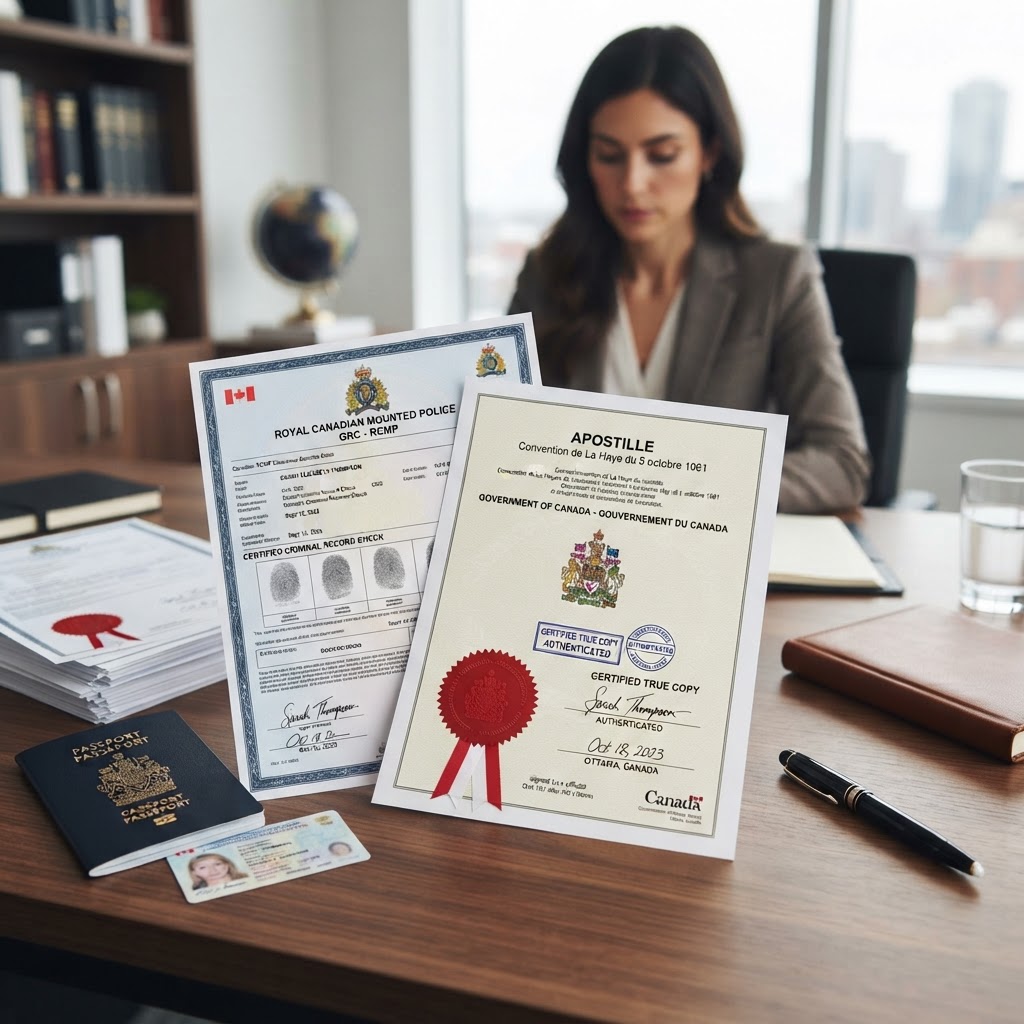
Canadian Police Clearance Apostille: The Official Guide
Since January 11, 2024, the landscape for document legalization in Canada has fundamentally changed. With Canada’s formal accession to the Hague Apostille Convention, the traditional multi-step process of authentication and legalization has been replaced by the streamlined 'Apostille' process. For individuals planning to work, study, or immigrate abroad, obtaining an apostille for a Canadian police clearance certificate is now a frequent requirement. Whether you are providing a document for employment in Europe or residency in another member nation, understanding the current requirements is essential to avoid processing delays. ## Understanding the Canadian Police Clearance Certificate In Canada, a standard police clearance for international use is typically a name-based or fingerprint-based criminal record check issued by the Royal Canadian Mounted Police (RCMP). These documents are often requested by foreign governments to verify an individual's background. Before a document can be apostilled, it must be in a state that meets the standards of the Global Affairs Canada (GAC) or the designated provincial competent authorities. ### Types of Police Checks There are generally two forms of checks accepted: 1. Name-based criminal record checks: Issued by local police services or the RCMP. 2. Certified criminal record checks: These are fingerprint-based and processed directly through the RCMP Canadian Criminal Real Time Identification Services (CCRTIS). For international purposes, the fingerprint-based report is more commonly required as it provides the highest level of verification. ## The Role of the Apostille in Canada The apostille is a certificate issued by a competent authority in Canada that verifies the authenticity of a public document. It replaces the former requirement for 'legalization' at an embassy or consulate for countries that are party to the Hague Apostille Convention. This simplifies the process by ensuring that the document is recognized as valid within any other member country without further scrutiny. ### Who Issues Apostilles in Canada? Since the implementation of the Convention, authority for issuing apostilles has been decentralized: * Global Affairs Canada (GAC): Handles documents issued by the federal government and certain other documents that meet specific criteria. * Provincial Competent Authorities: Each province, such as the Ministry of Public and Business Service Delivery in Ontario, has established its own office to handle apostilles for provincial documents, including vital statistics records and certain police records notarized within the province. ## The Process for Apostilling an RCMP Report To have your Canadian police clearance apostilled, you must follow a structured workflow to ensure compliance: 1. Obtain the Original Document: Ensure your RCMP criminal record check is original and signed by an authorized official. 2. Notarization: Depending on the specific document and the requirements of the receiving country, you may need to have your police check notarized by a Canadian Notary Public or a Commissioner of Oaths. This is a critical step for documents not issued directly by a government office. 3. Verification of Requirements: Verify whether the receiving country requires the document to be a specific age (e.g., issued within the last three or six months). 4. Submission to Competent Authority: Submit your notarized or government-certified document to the appropriate apostille office. ## Common Challenges and How to Avoid Them Even with the simplified apostille system, applicants often face hurdles that result in the rejection of their documents. ### 1. Document Integrity Global Affairs Canada and provincial offices will reject any document that has been tampered with or shows signs of alteration. Always ensure your criminal record check is a clean, original copy. ### 2. Notary Stamp Issues If your document requires notarization, the notary must use a clear, legible seal. In Canada, a notary public’s signature must be verifiable. If the signature is not on file with the authentication office, or if the notary’s commission has expired, the apostille process will be halted. ### 3. Jurisdiction Confusion One of the most frequent errors is sending a provincial document to Global Affairs Canada or vice versa. For example, if your document was notarized by an Ontario notary, it must generally be processed through the provincial Ontario office rather than the federal office, unless it is a federal-level document. ## Professional Assistance for Canadian Documents Navigating the nuances of the apostille process across various Canadian provinces can be time-consuming. Because each province has unique administrative requirements for the authentication of documents, individuals often seek professional services to manage the logistics. Expert services assist in: * Reviewing documents for compliance before submission to minimize the risk of rejection. * Managing the submission process with federal and provincial competent authorities. * Ensuring that the chain of authentication—from the initial RCMP issuance to the final apostille—is correctly documented. ## Summary for Applicants Obtaining an apostille for a Canadian police clearance certificate is a vital step for those heading abroad. By ensuring your criminal record check is correctly issued, and if necessary, properly notarized by a Canadian legal professional, you can ensure that your document is accepted by foreign authorities. Remember to check the specific requirements of the country where you intend to use the document, as some jurisdictions may still have specific formatting or timing requirements, even within the framework of the Hague Convention.
Need Help with Your Documents?
Our team is ready to assist with your apostille needs. Get a free quote or start your order today.