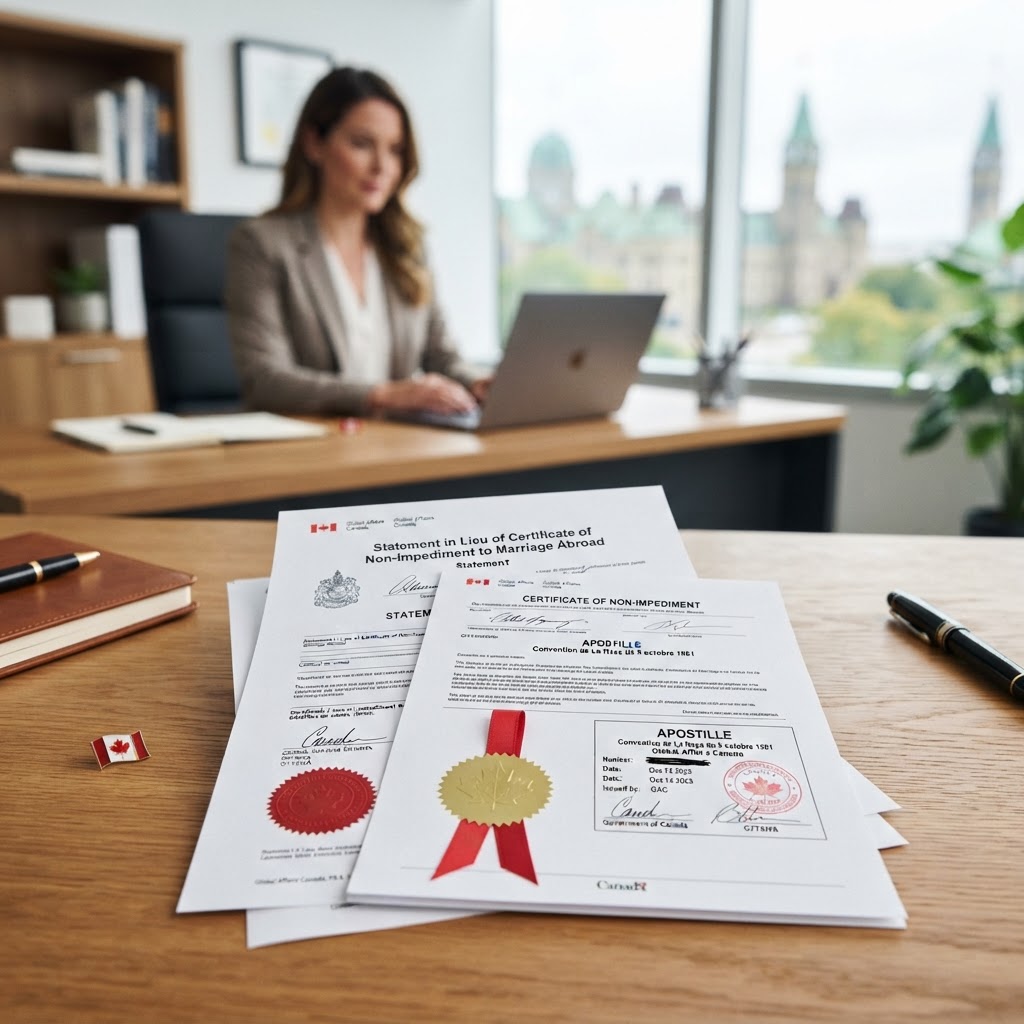
Canadian Single Status Certificate Apostille: A Complete Guide
Understanding the Canadian Single Status Certificate
A Canadian single status certificate, often referred to as a Certificate of Non-Impediment to Marriage, is a formal document confirming that an individual is currently unmarried and free to marry under Canadian law. This document is frequently required by foreign governments when a Canadian citizen intends to marry in another country. It serves as legal proof that there are no existing marital barriers to your union.
The Impact of the Hague Apostille Convention
Since January 11, 2024, Canada has officially joined the Hague Apostille Convention. This historic shift has significantly streamlined the process for Canadian documents destined for use in other member countries. Previously, Canadian documents required a multi-step process involving Global Affairs Canada and various foreign embassies or consulates. Now, the apostille process—a single certificate issued by a designated Canadian authority—replaces the complex chain of embassy legalizations. This change reduces processing times and simplifies international document recognition for Canadian citizens and businesses.
How to Obtain a Single Status Certificate
Before you can proceed with the apostille process, you must obtain a valid single status certificate from the appropriate provincial authority. The specific process varies depending on your province or territory of residence:
- Provincial Vital Statistics Offices: In provinces like Ontario, you apply through the Office of the Registrar General or Service Ontario. You will typically need to provide proof of identity and pay the required administrative fee.
- Notarization Requirements: Often, the certificate may need to be notarized by a Canadian notary public before it can be accepted for the apostille process. It is critical to ensure that the document you obtain is an original or a certified true copy that meets the criteria set by Global Affairs Canada or the provincial competent authority.
The Apostille Process in Canada
Once you have your properly notarized single status certificate, you must have it apostilled. Depending on the nature of the document and the issuing authority, your apostille will be processed by either Global Affairs Canada (for federal documents) or the provincial competent authority in the province where the document originated.
Step-by-Step Overview
- Preparation: Ensure your document is a valid, original Canadian vital statistics document. If required, have the document notarized by a Canadian lawyer or notary public.
- Submission: Submit your documentation to the appropriate authority. For documents originating in provinces that have assumed the apostille function, you will work with the local government office (e.g., the Ministry of Public and Business Service Delivery in Ontario).
- Processing: The authority reviews the document to ensure the notary seal or the signature of the provincial official is authentic. Once verified, the apostille certificate is attached to your document.
- Verification: Many Canadian provinces and the federal government now utilize electronic registries where foreign authorities can verify the authenticity of the apostille certificate online.
Why Professional Apostille Services Matter
Navigating the bureaucratic requirements for document authentication can be complex, especially when strict deadlines are involved. Errors in documentation—such as missing signatures, incorrect seals, or improper notarization—can lead to significant delays or the rejection of your documents by foreign authorities.
Working with an experienced Canadian service provider ensures that your documents are prepared correctly the first time. Professionals who specialize in Canadian document authentication understand the specific requirements for different jurisdictions and can navigate the requirements of Global Affairs Canada and provincial offices efficiently. This is particularly beneficial for individuals residing in Brampton, Ontario, or elsewhere across the country, as it eliminates the need for repeated trips to government offices or handling complicated courier logistics.
Common Challenges and How to Avoid Them
- Incorrect Document Types: Not all Canadian certificates are eligible for an apostille. Always ensure you are requesting the long-form birth or marriage-related certificate that is recognized for international use.
- Expired Notarizations: If your document requires a notary seal, ensure it is current. Foreign governments are often very strict about the validity of the notary signature.
- Processing Delays: Government processing times can fluctuate. It is advisable to factor in potential backlog periods, especially during peak wedding seasons.
- Jurisdictional Confusion: Understanding whether your document falls under provincial or federal jurisdiction is key. Misrouting your request can add weeks to the process.
Conclusion
The implementation of the Hague Apostille Convention has been a transformative development for Canadians needing to authenticate documents like the single status certificate. While the process is now more standardized, attention to detail remains paramount. By ensuring your documents are correctly notarized and submitted to the appropriate provincial or federal authority, you can ensure a smooth experience when preparing for your marriage or legal proceedings abroad.
Need Help with Your Documents?
Our team is ready to assist with your apostille needs. Get a free quote or start your order today.