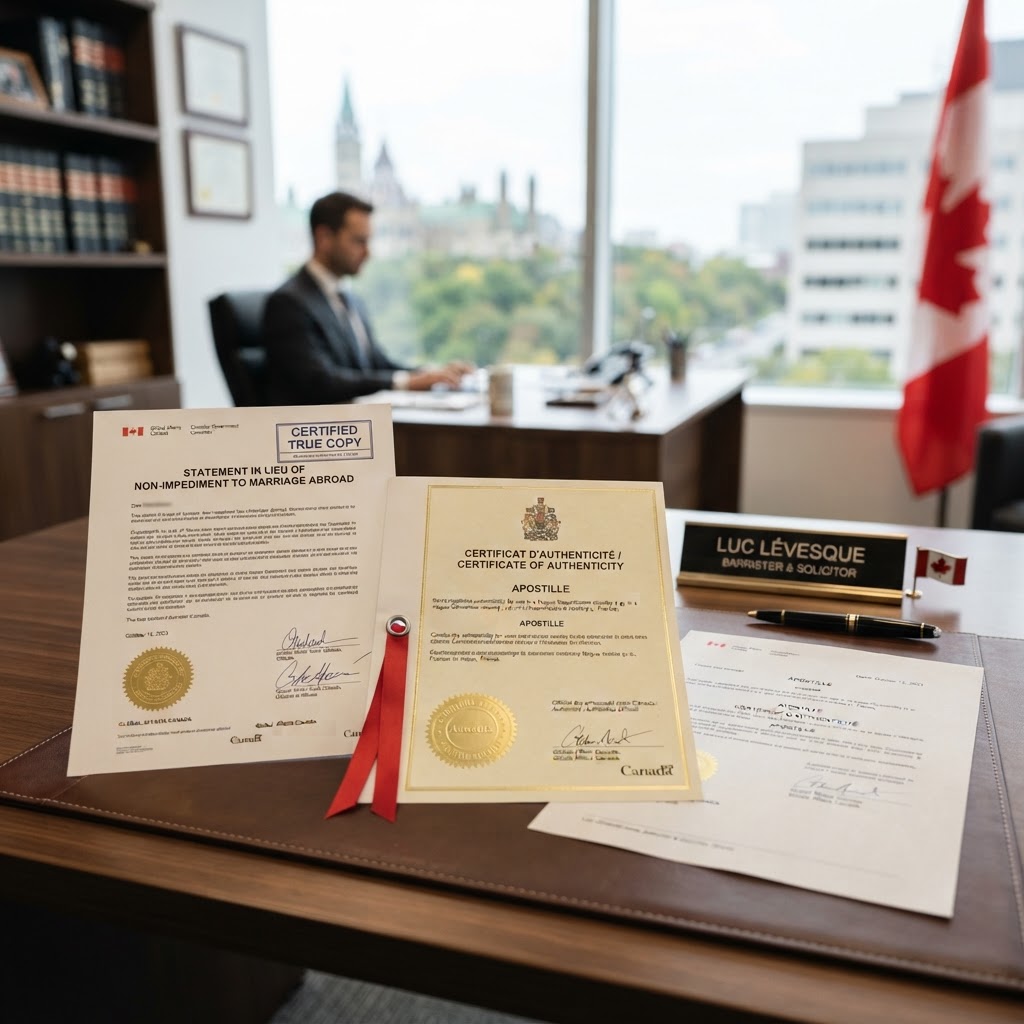
Canadian Single Status Certificate Apostille Guide
Understanding the Canadian Single Status Certificate
A single status certificate, often referred to in Canada as a Statement in Lieu of Certificate of Non-Impediment to Marriage Abroad, is a formal document required by many foreign jurisdictions when a Canadian citizen wishes to marry internationally. This document confirms that you are currently unmarried and free to enter into a marriage contract. Because foreign authorities cannot verify Canadian civil registry records directly, they require proof that the document is authentic and legally recognized. Since Canada officially joined the Hague Apostille Convention in January 2024, the process for verifying these documents has been streamlined through the apostille mechanism.
The Role of the Apostille in Canada
An apostille is a standardized certificate that authenticates the origin of a public document. It replaces the old, multi-step process of authentication and legalization that previously involved Global Affairs Canada and various foreign embassies. Under the new framework, a Canadian apostille issued by a competent authority confirms that the signature, seal, or stamp on the document is genuine. For a single status certificate, the apostille ensures that the document will be accepted in any of the over 120 countries that are members of the Hague Apostille Convention.
Step-by-Step Process for Your Certificate
Obtaining an apostille for a single status certificate involves a specific sequence of actions to ensure the document meets all regulatory requirements.
1. Obtain the Proper Documentation
First, you must acquire the statement from a provincial vital statistics office or have a statutory declaration prepared. If you are preparing a statutory declaration, it must be signed in the presence of a Canadian notary public or a commissioner for taking affidavits.
2. Notarization
If your document was not issued directly by a government vital statistics office, it must be notarized by a Canadian notary public. This step creates a foundation of trust that the document is legitimate before the apostille process begins. Ensure that the notary's signature, seal, and registration number are clearly visible.
3. Submission to Competent Authorities
Depending on the province where the document was issued or notarized, the apostille will be issued by either Global Affairs Canada or the provincial government office (such as Official Document Services in Ontario). These offices verify the identity of the notary or the government official who issued the original certificate.
Why Professional Assistance Matters
Navigating the bureaucratic requirements for document authentication can be complex, especially when timelines for international travel or marriage are tight. Errors in the documentation—such as missing seals, incorrect notary wording, or outdated forms—can result in rejection by government offices.
Professional services provide several advantages:
- Expert review of document compliance with Canadian provincial and federal standards.
- Expedited handling through established relationships with authentication offices.
- Minimized risk of processing delays caused by administrative errors.
- Support for individuals residing outside of major hubs like Brampton or the Greater Toronto Area.
Common Challenges and How to Avoid Them
Many applicants face delays because they misunderstand the specific requirements of the destination country. Even though Canada has joined the Apostille Convention, some countries may have specific local requirements regarding the age of the document or the need for a certified translation. Always check with the embassy or consulate of the country where you intend to marry to ensure you have met their specific criteria alongside the Canadian apostille requirements.
Furthermore, ensure that your document is in pristine condition. Torn, laminated, or altered documents may be refused by authorities. Always use an original or a certified true copy where required by the issuing authority.
Frequently Asked Questions
Does every country accept a Canadian apostille?
Countries that are members of the Hague Apostille Convention will accept the apostille. For countries that are not members, a different process of chain authentication may still apply.
How long does the apostille process take?
The timeline varies based on the current workload of the provincial or federal competent authorities. Engaging a professional service can help streamline the transit and submission times, providing a clearer estimate for your specific documents.
Can I use a photocopy of my document?
Generally, no. Official authentication requires either the original document issued by a government authority or a certified true copy notarized by a Canadian professional. Photocopies usually do not carry the legal weight required for an apostille.
Conclusion
Securing an apostille for your Canadian single status certificate is a vital step in ensuring your international plans proceed without legal obstacles. By understanding the transition to the Hague Apostille Convention and ensuring your documentation is properly prepared by a notary or government official, you simplify a once-daunting administrative task. Whether you are in Brampton or across Canada, following these established procedures ensures that your Canadian documents meet the international standards required for official recognition abroad.
Need Help with Your Documents?
Our team is ready to assist with your apostille needs. Get a free quote or start your order today.