Back to BlogGlobal Affairs Canada apostille
Global Affairs Canada Apostille: The Complete 2024 Guide
August 12, 2026
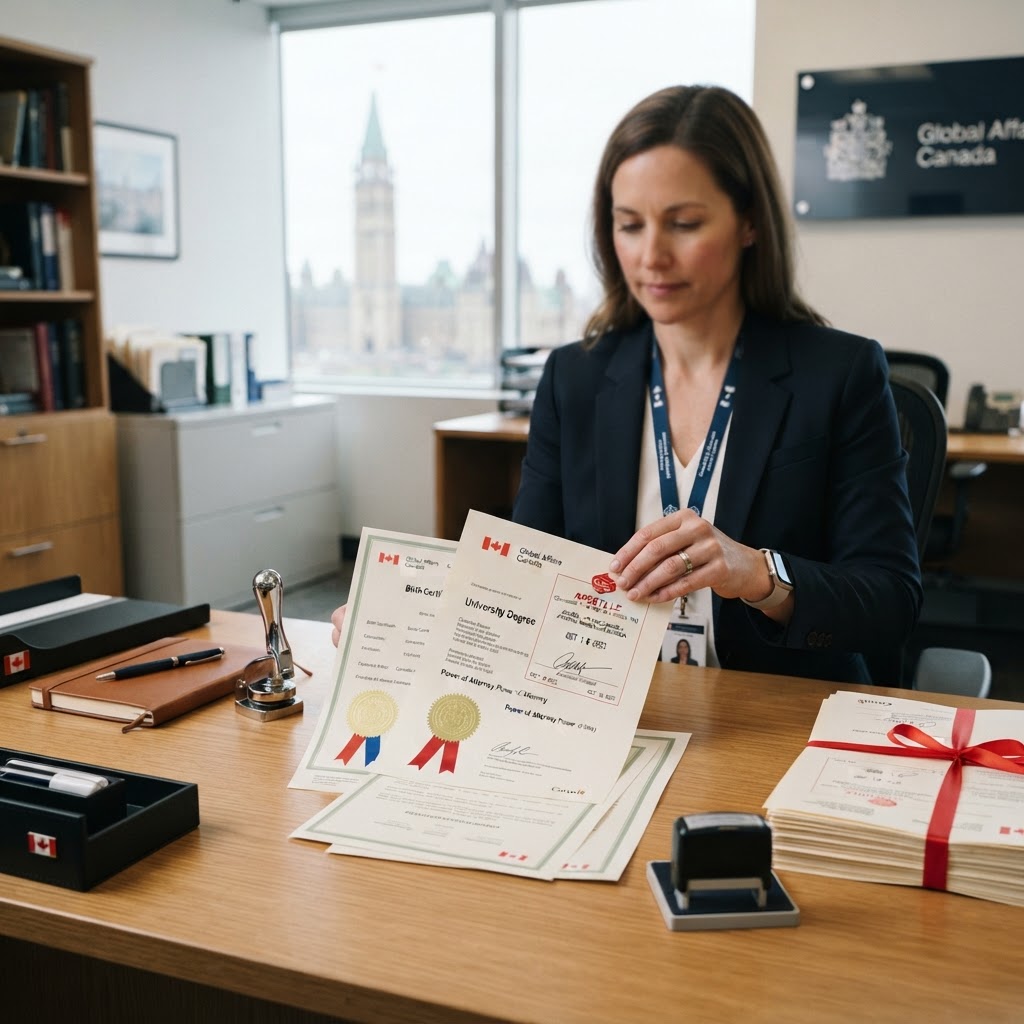
Understanding the New Canadian Apostille Process Since January 2024, Canada has officially joined the Hague Apostille Convention, fundamentally changing how Canadian documents are prepared for use abroad. For individuals and businesses looking to use Canadian documents in other member countries, the old, multi-step legalization process involving both Global Affairs Canada (GAC) and foreign embassies has been replaced by the apostille. This simplifies international document acceptance by replacing embassy authentication with a single, standardized certificate. ## What is a Global Affairs Canada Apostille? An apostille is a specialized certificate issued by a designated competent authority that verifies the authenticity of a public document. When Global Affairs Canada or a provincial authority attaches an apostille to your document, it confirms the signature, seal, or stamp of the official who signed the document is genuine. This process ensures that documents such as Canadian birth certificates, RCMP criminal record checks, or university degrees are legally recognized in other Hague Convention countries without further intervention from foreign consulates. ## Key Canadian Documents Requiring Authentication Many Canadians find themselves needing an apostille for personal or professional reasons. Common document types include: ### Personal Documents * Canadian birth, marriage, and death certificates issued by provincial vital statistics offices. * RCMP criminal record checks or local police clearance certificates. * Educational documents, including degrees, diplomas, and transcripts from recognized Canadian universities and colleges. * Notarized powers of attorney or affidavits signed by a Canadian notary public or commissioner of oaths. ### Business Documents * Articles of incorporation issued by federal or provincial registries. * Commercial contracts, invoices, and certificates of origin. * Board resolutions and corporate bylaws. ## The Role of Global Affairs Canada and Provincial Authorities Under the new regime, the authority to issue apostilles is shared between Global Affairs Canada and various provincial offices. Depending on the nature of your document, you must submit it to the appropriate body: * Global Affairs Canada: Typically handles federal documents and documents notarized by federal officials. * Provincial Authorities: Many provinces have designated offices (such as Service Ontario or provincial justice ministries) to process documents issued by provincial bodies, such as birth certificates or documents notarized by provincial notaries. It is crucial to identify whether your document requires federal or provincial processing before submission to avoid delays. ## Steps to Successfully Apostille Your Documents 1. Verification of Originality: Ensure your document is either an original issued by a government authority or a certified copy signed by a Canadian notary public. 2. Notarization: If your document is a private contract or a copy of a document, it must first be notarized by a licensed Canadian notary public to confirm its validity. 3. Submission: Submit the document to the correct competent authority—either Global Affairs Canada or the relevant provincial office. 4. Processing: The authority verifies the signature or seal and attaches the apostille certificate. 5. Translation: If the destination country requires it, you may need to have your document professionally translated after the apostille process is complete. ## Why Professional Assistance Matters While the process is designed to be more efficient than the old legalization method, it remains highly technical. Incorrectly notarized documents, outdated certificate versions, or submitting to the wrong authority can lead to the rejection of your application. Professional services based in hubs like Brampton, Ontario, help ensure your documentation meets the strict standards of both Canadian authorities and foreign requirements. This saves time and minimizes the risk of having a document returned due to minor administrative errors. ## Common Challenges and How to Avoid Them * Expired or Invalid Notarization: Notaries must be currently registered and in good standing. Ensure your notary has included their full name, registration number, and a clear, readable seal. * Submitting Photocopied Documents: Most authorities will not apostille a photocopy unless it has been notarized as a true copy by a licensed professional. * Incomplete Documentation: Always verify if your specific destination country requires additional steps, such as translation or further certification by a specific foreign trade office, even with an apostille. ## Conclusion The adoption of the Hague Apostille Convention marks a significant step forward for international document mobility in Canada. By streamlining the verification process through Global Affairs Canada and provincial offices, Canadian citizens and businesses can now navigate international requirements with greater clarity. Whether you are moving abroad, starting a business in a new market, or dealing with international legal matters, understanding these updated requirements is the first step in ensuring your documents are accepted without issue.
Need Help with Your Documents?
Our team is ready to assist with your apostille needs. Get a free quote or start your order today.